

Startup capital refers to the money a new business uses to launch and fund itsoperations before it can generate its own revenue. It comes from sources including personal savings, friends and family, angel investors, venture capital firms, crowdfunding, and government grants. The right source depends on the type of business, how much capital is needed, how fast growth must happen, and how much ownership the founder is willing to give up.
Introduction
Global venture capital hit $425 billion in 2025. Every week, headlines cover multi-million-dollar startup rounds and high-profile investors. But here is the actual number: only 0.05% of startups ever raise venture capital.
Most founders start with personal savings, a credit card, or help from people they know. That is startup capital too. According to Kauffman Foundation research, roughly 65% of entrepreneurs relied primarily on personal and family resources when they launched.
Startup capital is not just a term for Silicon Valley fundraising. It covers every dollar a new business uses to get off the ground. The source of that money matters as much as the amount. Pick the wrong type and you can lose control of your business, take on debt you cannot repay, or run out of funding before your first customer arrives.
This guide explains what startup capital is, where it comes from, what each type costs you, and how to pick the right path for your business in 2026.
What Is Startup Capital?
Startup capital is the money a business needs to launch and keep running until it earns its own revenue. It covers the costs of getting a business open and keeping it alive through the early months before income shows up.
Startup capital covers two main types of costs:
| Cost Type | Examples |
| One-Time Setup Costs | Business registration, equipment, product development, website, legal fees |
| Recurring Operating Costs | Salaries, rent, software, marketing, utilities |
Think of it this way: startup capital is the financial fuel that moves a business from an idea to an actual operation. Once a business earns enough to cover its own costs, it no longer depends on startup capital.
Startup capital is not profit. It is not revenue. It is the money you spend before revenue shows up. Every new business needs some of it, whether that is $500 or $5 million.
The U.S. Small Business Administration (SBA) defines self-funding, a common form of startup capital, as using your own financial resources to support a business. That definition extends to all forms of startup financing, from personal savings to formal venture rounds.
Startup Capital vs. Working Capital: What Is the Difference?
Many people mix up startup capital and working capital. They are connected but they serve very different purposes.
Startup capital definition centers on launching. It covers the costs of starting a business that does not yet make money.
Working capital covers day-to-day expenses once a business is already open and running. It pays for things like inventory, payroll, and rent during normal operations.
| Feature | Startup Capital | Working Capital |
| Main Purpose | Fund the business launch | Cover daily operating expenses |
| Timing | Used before steady revenue arrives | Used while the business is active |
| Common Sources | Personal savings, investors, loans | Revenue, credit lines, short-term loans |
| Duration | Short-term or one-time | Ongoing |
There is overlap in the very early months. A new business may use startup capital to cover what would normally be working capital costs, such as payroll or rent. As revenue grows, working capital gradually takes over as the main source of funds.
What Are the Main Sources of Startup Capital?
Understanding the types of startup capital available is the first real step in learning how to raise startup capital for your business. Each type works differently and carries its own trade-offs. Some require giving up a share of your company. Others require repayment with interest. A few cost nothing but time.
Here are the seven main startup capital sources.
1. Personal Savings and Bootstrapping

Bootstrapping means building a business using your own money and the revenue the business earns. No outside investors. No loans. Just personal savings, credit cards, and profits put back into the company.
Kauffman Foundation research found that roughly 65% of entrepreneurs rely on personal savings and family resources at launch. The SBA calls this self-funding and describes it as one of the most common ways new businesses get started.
Bootstrapping is also the only source that lets you keep 100% of your company and make all decisions yourself. Many well-known companies, including Basecamp and Mailchimp, scaled to profitability without ever raising outside capital.
Best for: Service businesses, freelancers, consultants, and any business that can reach paying customers quickly with low upfront costs.
Key trade-off: Personal financial risk. If the business fails, your savings go with it. Growth is also tied to what the business earns, which can be slow in the early stages.
2. Friends and Family

Borrowing from people who trust you is one of the fastest ways to get early startup capital. Friends and family rounds are informal, move quickly, and often carry flexible repayment terms.
This type of funding is common at the pre-seed stage, before a business is ready to approach formal investors.
Best for: Very early-stage businesses that need a small amount to test an idea or build a first prototype.
Key trade-off: Money and personal relationships are a difficult mix. Always document the terms in writing. Be clear from the start about whether the money is a loan, an investment, or a gift.
3. Angel Investors

Angel investors are individuals who invest their own money into early-stage startups in exchange for equity. They typically write checks between $10,000 and $250,000, though some write larger amounts. Many angel investors are former founders or executives.
Platforms like AngelList connect founders with potential angels. Local angel networks also exist in most major cities. Angel investors are generally willing to take more risk than venture capital firms because they invest their own funds and often care about the founders as much as the business.
A good business plan and a clear pitch help when approaching angels. They want to understand the problem you are solving, who your customers are, and why you are the right person to build this.
Best for: Startups that have a clear idea, an early product, or some initial customer traction, but are not yet ready for a formal VC round.
Key trade-off: You give up a share of your company. You may also take on an investor who wants regular updates and input on company decisions.
4. Venture Capital

Venture capital (VC) firms raise money from institutional investors, such as pension funds and endowments, and invest it into high-growth startups. In exchange for capital, VC firms receive equity and often a board seat.
This is the type of funding that gets the most news coverage. But it is also the rarest path. Only 0.05% of startups raise venture capital. VC is specifically built for businesses that can grow very large, very fast, usually targeting a billion-dollar exit through an acquisition or IPO.
In 2025, global venture and growth investors put $425 billion into more than 24,000 companies (Crunchbase). A large share of that went to a small number of AI companies. Firms like Sequoia Capital, Andreessen Horowitz (a16z), and accelerators like Y Combinator are among the most recognized names in venture funding.
Founders who pursue this path need a strong pitch deck, clear traction data, and months of patience. Raising a seed or Series A round typically takes two to five months of active outreach, meetings, and due diligence.
Best for: Startups targeting large markets, with demonstrated product-market fit and the ability to grow at scale quickly.
Key trade-off: Significant equity dilution. Investor expectations for rapid growth. Possible loss of some decision-making authority.
5. Crowdfunding

Crowdfunding raises money from a large group of people, each contributing a small amount. There are two main types.
Reward-based crowdfunding, available on platforms like Kickstarter and Indiegogo, lets backers contribute in exchange for a product, perk, or early access. This approach also validates demand before you build at scale.
Equity crowdfunding lets individual investors buy small stakes in your company. Under Regulation Crowdfunding, a rule from the U.S. Securities and Exchange Commission (SEC), eligible companies can raise up to $5 million in a 12-month period from a broad pool of investors.
Best for: Consumer product businesses, creative projects, and any startup that benefits from early public exposure and community-building.
Key trade-off: Reward crowdfunding requires you to deliver on promises to backers. Equity crowdfunding adds shareholders and some reporting obligations.
6. Small Business Loans

Business loans come from banks, credit unions, or SBA-guaranteed lenders. You borrow a fixed amount and repay it with interest over a set period.
Unlike equity investment, loans do not require giving up any ownership. You keep your full share of the company. But loans do require repayment, which means the business needs to generate enough revenue to cover payments regardless of how it is performing.
Best for: Businesses with some operating history, assets that can serve as collateral, or founders with strong personal credit.
Key trade-off: You must repay even if the business struggles. Very early-stage startups with no revenue often have difficulty qualifying for bank loans.
7. Government Grants
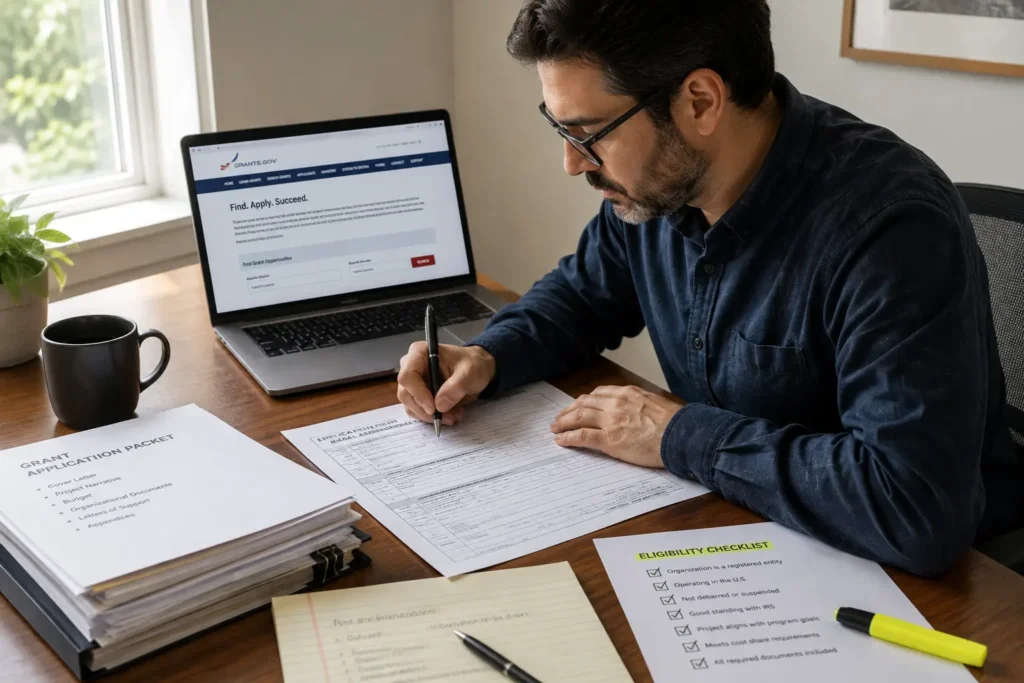
Grants are money you do not have to repay and do not require giving up equity. They are one of the best forms of non-dilutive startup capital available. Government grants at the federal, state, and local levels target specific industries, geographic areas, and founder demographics.
The federal grants database at grants.gov lists hundreds of programs. Some focus on research and development. Others target women founders, veterans, or businesses in economically underserved areas.
Revenue-based financing (RBF) is another non-dilutive option, offered by providers like Stripe Capital, Pipe, and Lighter Capital. With RBF, a company receives upfront capital and repays it as a percentage of monthly revenue until a set multiple is repaid. This works well for businesses with steady, predictable monthly income.
Best for: Research-heavy businesses, startups in targeted industries or demographics, and companies that qualify for specific programs.
Key trade-off: Grants are highly competitive and take time to apply for and receive. RBF requires consistent monthly revenue and works best for SaaS or subscription businesses with strong margins.
Summary: 7 Sources of Startup Capital Compared
| Source | Equity Required | Typical Amount | Best Stage | Access Speed |
| Personal Savings | No | Varies | Pre-idea | Immediate |
| Friends and Family | Sometimes | $1K to $50K | Pre-seed | Fast (days to weeks) |
| Angel Investors | Yes | $25K to $500K | Pre-seed to Seed | Weeks to months |
| Venture Capital | Yes | $1M+ | Seed to Series A+ | 2 to 5 months |
| Crowdfunding | Sometimes | $5K to $5M | Pre-launch to Seed | 30 to 90 days |
| Small Business Loans | No | $10K to $500K+ | Early stage | Weeks to months |
| Government Grants or RBF | No | Varies | Any stage | 3 to 12 months |
What Are the Stages of Startup Funding?
Startup funding generally moves through defined stages. Each stage reflects where a company sits in its development and what kind of investor it is ready for.
Most companies never move past the seed stage. That is not a failure. Many profitable businesses stay at seed or grow entirely on bootstrapping.
Here are the main startup funding stages with 2026 benchmarks from DealRoom, Crunchbase, and PitchBook:
| Stage | Typical Raise | Typical Valuation | Investor Type | Typical Dilution |
| Pre-Seed | $250K to $1.5M | $5M to $10M | Angels, accelerators, friends and family | 10 to 20% |
| Seed | $1.5M to $6M | $10M to $25M | Seed VC firms, angel syndicates | 15 to 25% |
| Series A | $10M to $25M | $40M to $120M | Tier-1 VC firms | 18 to 25% |
| Series B | $20M to $60M | $100M to $300M | Growth-stage VCs | 15 to 22% |
| Series C | $30M to $100M | $250M to $600M | Late-stage VCs, crossover funds | 12 to 20% |
Pre-seed is the earliest formal stage. Founders use this money to validate an idea, build a first product version, and form the core team. Typical investors include angels, accelerators like Y Combinator, and pre-seed micro-funds.
Seed funding is where most formal startup fundraising begins. The goal is to prove product-market fit and build an early go-to-market approach. The median seed round in 2025 was around $3 million, down from a peak of $4.1 million in 2022 as the market settled.
Series A is for companies that have proven their product works and are ready to grow. To raise Series A from firms like a16z, Sequoia, or Accel, most investors want to see $1 million to $3 million in annual recurring revenue for SaaS companies, or comparable traction in other models. According to TekxAI’s 2026 fundraising data, only 35 to 40% of seed-funded startups successfully reach Series A.
Series B and beyond focus on scaling into new markets, expanding the team, and building toward a major exit. By Series B, investors expect strong unit economics and a repeatable growth model.
A convertible note or SAFE (Simple Agreement for Future Equity) is often used at the pre-seed and early seed stages. SAFEs let investors put in money now and convert to equity at the next priced round, at a discount or with a valuation cap. They are simpler and cheaper than full equity rounds, which is why many early-stage startups use them.
How Much Startup Capital Do You Actually Need?
There is no universal answer. The amount of startup capital for a small business looks very different from what a venture-backed tech startup needs. Your number depends on your industry, your business model, and how long you expect to operate before revenue covers your costs.
First-year capital needs by business type, based on industry surveys:
| Business Type | Typical First-Year Capital Needed |
| Service or consulting | $10,000 to $150,000 |
| Retail or e-commerce | $20,000 to $250,000 |
| Technology or SaaS startup | $50,000 to $500,000 |
| Manufacturing or hardware | $100,000 to $1,000,000+ |
You can estimate your own number in three steps.
Step 1: List your one-time setup costs. These are expenses you pay before the business is open. Include equipment, legal fees, website development, licenses, product development, and any initial inventory.
Step 2: Estimate your monthly operating costs times your runway target. Runway is the number of months you plan to operate before the business earns enough to cover itself. Most founders plan for 12 to 18 months. Multiply your monthly costs by that number. Monthly costs include salaries, software subscriptions, rent, utilities, and marketing.
Step 3: Add a 20 to 30% buffer. Costs run higher than expected. A buffer keeps you from running out of funding before you hit your targets.
Two terms you will hear throughout any startup funding conversation are burn rate and runway. Burn rate is how much money the business spends each month. Runway is how many months of funding you have left at the current burn rate. A business with $300,000 in the bank and a monthly burn rate of $25,000 has 12 months of runway.
The average seed round sits at around $2.2 million, which is well above what most small businesses need to launch (Crunchbase data, cited by affmaven.com). Most founders starting a service or digital business need far less than that to get their first paying customers.
For detailed financial planning, the startup financial modeling guide on this site covers how to build a cash flow forecast for a self-funded business.
What Is Equity Dilution and Why Does It Matter?
Equity dilution happens when a startup issues new shares to investors. Each time it happens, existing shareholders own a smaller percentage of the company.
For founders, this means your ownership shrinks with each funding round. You might start owning 100% of the company. After a pre-seed round, you might own around 85%. After a seed round, closer to 68%. After Series A, about 53%.
Here is how median dilution builds up over time, based on DealRoom’s 2026 model:
| Stage | Founder Ownership (Median Dilution Rates) |
| Founding | 100% |
| After Pre-Seed | ~85% |
| After Seed | ~68% |
| After Series A | ~53% |
| After Series B | ~43% |
| After Series C | ~36% |
Carta’s 2026 Founder Ownership Report tracks real cap table data. The median founding team kept about 56% of equity after a seed round. After Series A, that dropped to about 36%.
Dilution is not automatically bad. If you own 36% of a company worth $100 million, that is worth far more than 100% of a company worth $500,000. The key question is whether the funding you take in actually builds company value faster than it reduces your ownership percentage.
Not all startup capital causes dilution. Loans, government grants, and revenue-based financing do not reduce your ownership. They come with other obligations, like repayment or revenue sharing, but your cap table stays clean.
The startup valuation calculator on this site can help you model how different funding amounts and valuations affect your equity position before you sign anything.
How Do You Choose the Right Type of Startup Capital?
The right type of startup capital is the one that solves your biggest business problem without creating a bigger one.
Before seeking outside capital, answer three questions:
- What will this money specifically be used for?
- How will it change a measurable business result?
- Am I ready for the obligations this type of capital brings, whether that is repayment, investor reporting, or giving up equity?
Use this table to match your situation to the most likely capital path:
| Your Situation | Most Likely Capital Path |
| Can reach paying customers quickly, low costs | Bootstrap with personal savings |
| Need $10K to $50K, strong personal network | Friends and family round |
| Have an early product, need $50K to $500K | Angel investors or crowdfunding |
| Proven product-market fit, need $1M+ | Seed VC or formal angel syndicate |
| Have steady revenue, want no equity dilution | Revenue-based financing or SBA loan |
| Research-focused or specific demographic | Government grants |
| Large market, rapid growth is the goal | Venture capital |
The startup funding environment in 2026 is different from 2020 or 2021. According to TekxAI’s fundraising analysis, the “grow at all costs” era is over. Investors at every stage above pre-seed now want a credible path to positive gross margins. Raising money just because it is available is not a good enough reason.
A common mistake is taking VC money when a business does not need venture-scale growth. If you are building a profitable regional business or a consulting firm, venture capital is probably the wrong fit. It is built for businesses targeting outcomes in the hundreds of millions.
Waiting too long to raise can also carry a cost. If competitors are building quickly with more capital and your market rewards speed, passing on outside funding can slow your company at a critical point.
One practical note for founders who are actively reaching out to investor platforms and tool providers during the funding process: your primary inbox fills up fast. Using a secondary or disposable email address for platform sign-ups, investor newsletters, and startup tool registrations keeps your main inbox focused on the conversations that matter.
Frequently Asked Questions About Startup Capital
What is the difference between startup capital and venture capital?
Startup capital is the broad term for any money used to launch a business. It includes personal savings, loans, grants, angel investment, and venture funding. Venture capital is one specific type of startup capital. VC firms invest pooled funds from institutional sources into high-growth startups in exchange for equity. Not all startup capital is venture capital, but all venture capital is a form of startup capital.
Can I start a business with no money at all?
Some businesses require very little startup capital to get off the ground. A freelance writing or consulting business can often launch with under $1,000. You need a computer, an internet connection, and a way to receive payment. Product-based businesses, restaurants, and tech startups typically need significantly more. The realistic minimum depends entirely on the industry and business model.
What is the difference between dilutive and non-dilutive startup capital?
Dilutive capital, such as equity investment from angels or VC firms, requires giving up a percentage of company ownership. Non-dilutive capital, such as government grants, SBA loans, or revenue-based financing, does not reduce founder ownership. Loans must be repaid with interest. Grants typically do not require repayment but are competitive and take time to secure.
How long does it take to raise startup capital?
A friends-and-family round can close in a few weeks. Pre-seed and seed rounds typically take two to four months. Series A rounds often take three to five months and involve formal due diligence, legal review, and board-level decisions. Government grant applications can take three to twelve months depending on the program.
What do angel investors look for before funding a startup?
Angel investors typically look for a credible founding team, a clear problem being solved, early signs of customer demand, a realistic business model, and a large enough market to justify the risk. At the earliest stages, the quality of the founder and the clarity of the idea often matter more than revenue numbers.
Is bootstrapping considered a form of startup capital?
Yes. Bootstrapping uses personal savings, credit, and early business revenue to fund operations. It is one of the most common forms of startup capital. Kauffman Foundation research suggests roughly 65% of founders rely primarily on personal and family resources at launch. It also keeps your cap table clean, meaning no outside investors own any part of the business.
What is a SAFE note in startup funding?
A SAFE (Simple Agreement for Future Equity) is a legal contract that lets an investor put in money today in exchange for the right to convert that money into equity at a future priced round, usually at a discount or with a valuation cap. SAFEs are common at the pre-seed and seed stages because they are simpler and less expensive to set up than a full priced equity round. They were created by Y Combinator and are now widely used across the startup funding ecosystem.
Where to Go From Here
Startup capital covers everything from your savings account to a formal Series A round. Most founders start small. Most never raise venture capital. Most build using a mix of personal resources, early revenue, and occasional outside help.
The path that works best is the one that matches how your business actually makes money, not the one that sounds most impressive. A subscription software business and a brick-and-mortar shop need very different types of capital at very different amounts.
If you are deciding whether to bootstrap or bring in outside investors, the bootstrapping vs. fundraising guide on this site walks through the trade-offs in detail. If you want to estimate how much your startup might be worth before approaching investors, the startup valuation calculator is a good starting point.
Always speak with a qualified financial or legal professional before choosing a funding structure, especially if equity or securities are involved.