


United Client Solutions is a real business name in debt collection, but many calls and emails using this name come from scammers, not the real company. A real debt collector must send you written proof of a debt. A scammer will not. Do not pay right away. Check the message first, then block, report, and protect your inbox so this does not happen again.
Your phone rings. Or a new email lands in your inbox. The name says United Client Solutions, and it talks about a debt you do not remember. Your stomach drops a little. You are not the only one this has happened to. Thousands of people search this name every month, and most of them ask the same three questions. Is this real? What do I say? How do I make it stop? This guide answers all three. You will also learn how your phone number and email address ended up on this list in the first place, and how to keep it from happening again.
Is United Client Solutions a Scam, or a Real Company?
A company called United Client Solutions does appear to be a real, registered business in debt collection. But the name is also copied by scammers. When someone uses this name to demand fast payment by gift card or wire transfer, that call or email is very likely fake, no matter who is really behind it.
During research for this guide, no clear official website could be found for United Client Solutions. That alone is worth noting as a warning sign. Real debt collectors usually have a working website, a phone line, and a clear business address you can check.
Scammers like to borrow real business names. It makes calls sound more believable. This trick is sometimes called debt collector impersonation. Some calls using this name may come from an actual debt collector. Others come from what experts call a phantom debt scam, where the debt does not exist at all. The Federal Trade Commission, known as the FTC, has taken legal action against companies running phantom debt scams like this. In one case, thousands of people paid more than $7.6 million for debts that were never real.
The Consumer Financial Protection Bureau, known as the CFPB, also tracks this problem closely. In 2024, the CFPB received about 207,800 complaints about debt collection. That is seven out of every one hundred complaints it received that year. Most were about collectors trying to get money for a debt the person did not owe.
So is United Client Solutions legit? The safest answer is this. Treat every call or email the same way. Ask for written proof. Do not pay on the spot. That rule protects you whether the caller is real or not.
What Do United Client Solutions Calls Actually Sound Like?
Most United Client Solutions calling reports share the same pattern. The caller sounds urgent, asks for fast payment, and may use a fake local number to seem trustworthy.
Here is what people describe most often.
- The caller sounds urgent. They talk about a lawsuit, an arrest, or a breach of contract.
- They push for payment right away, often through a gift card payment scam, a wire transfer, or crypto.
- The caller ID shows a local number. This trick is called caller ID spoofing. Scammers fake the number so it looks like it comes from your area, or even a government office.
- The caller knows a small detail about you, like your last name or your city.
- The call may be a robocall, a recorded message sent to many numbers at once.
- Some calls even use an AI voice cloning scam. The voice sounds human and can answer simple questions, which makes the call feel more real.
That small detail the caller knows does not prove the debt is real. It usually means your name and number were bought from a data broker. Debt often gets sold to a third-party debt collector, a company that buys old debt files and tries to collect on them. A real United Client Solutions debt collector, or any real collector, should never need to scare you into paying fast. Federal law sets strict rules for how they must act.
What Do United Client Solutions Emails Look Like, and How Do You Check One?
United Client Solutions emails often use urgent subject lines and a sender address that only looks close to a real company name. Checking the real address and any links before you click catches most of them.
Most guides about this topic only talk about phone calls. But United Client Solutions emails are just as common, and just as easy to fake. Here is how to check one before you click anything.
- Look at the real sender address, not just the name shown on screen. Scammers often use an address that only looks close to a real company name.
- Hover over any link without clicking it. Check if the web address matches what the email claims.
- Watch for pressure words like final notice, urgent, or act now.
- Never reply with a card number, bank account, or other payment details by email. A real collector will not ask for this in an email.
If you are not sure about a sender’s address, you can run the domain through a disposable email checker. A tool like this can show whether a domain looks like a throwaway address built just to trick people, which is a common trick in phishing emails.
Real Debt Collector vs. Scam Script: How to Tell the Difference
It helps to see the difference side by side.
| A Real Debt Collector | A Scam Script |
| Sends written proof of the debt by mail | Refuses to send anything in writing |
| Gives you time to check the debt | Demands payment today or right now |
| Accepts normal payment methods | Asks for gift cards, crypto, or wire transfer only |
| Follows calling hour rules | Calls at odd hours, again and again |
| Gives a real company name and address | Will not give a clear address |
Under the Fair Debt Collection Practices Act, known as the FDCPA, a real collector must send you a written validation notice within five days of first contact. This notice must explain the debt and your right to question it. This rule comes from federal law, listed as 15 U.S.C. § 1692. If someone skips this step and pushes for fast payment, that breaks the law, whether they are a real collector cutting corners or a total scammer.
Debt also has a time limit on how long a collector can sue you over it. This is called the statute of limitations on debt, and it is different in each state. A collector cannot restart this clock just by calling you about an old debt.
Exactly What to Say to Make Them Stop
You do not need a long conversation. Short and clear works best.
Say this out loud: “I am disputing this debt. Please send written validation by mail before I discuss this further. Do not call me again until you do.”
Then hang up. Do not argue. Do not confirm your birthday, your social security number, or any account numbers. Write down the date, the time, and the number that called you. This record helps later if you decide to report it.
How to Block United Client Solutions Calls and Emails
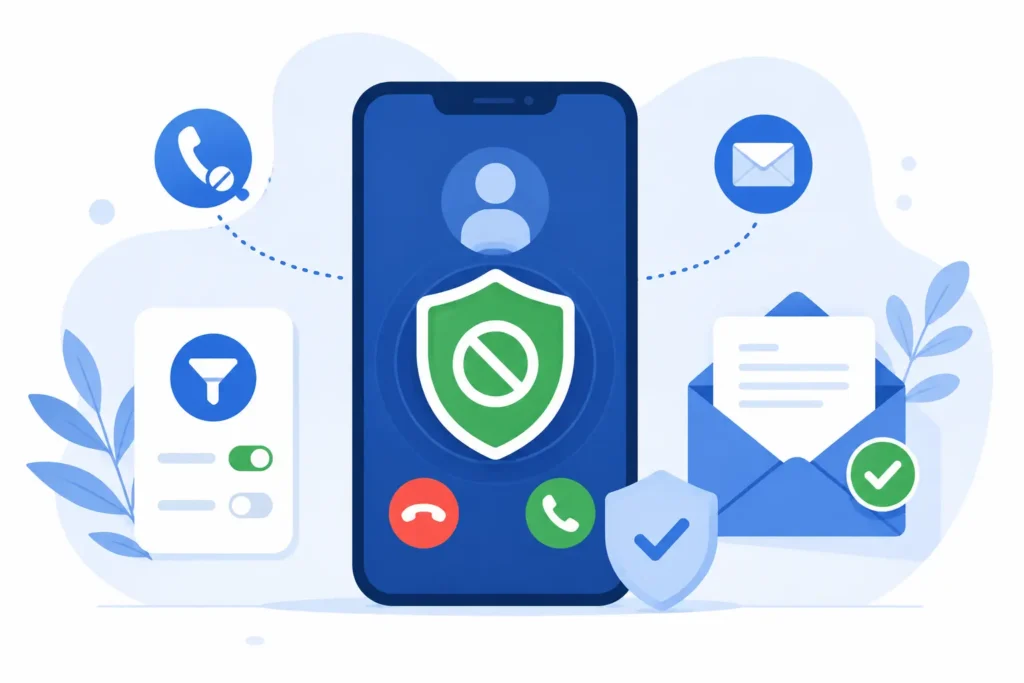
No single trick stops every call. Turning on your phone’s spam tools, adding a carrier filter, and using a call-blocking app together work far better than any one method alone.
Turn On Your Phone’s Built-In Tools
On an iPhone, go to Settings, then Phone, then turn on Silence Unknown Callers. On an Android phone, open your Phone app, go to Settings, and turn on spam filtering. These settings send most unknown numbers straight to voicemail.
Use Your Carrier’s Free Call Filter
Most major carriers offer a free spam filter.
| Carrier | Service | Cost |
| AT&T | AT&T Call Protect | Free, paid tier available |
| T-Mobile | T-Mobile Scam Shield | Free |
| Verizon | Verizon Call Filter | Free, paid tier available |
These services work with a system called STIR/SHAKEN, which helps phones tell real numbers from spoofed ones. You can also register your number with the national Do Not Call Registry. It will not stop scammers who already ignore the law, but it does stop legal telemarketers.
Call-blocking apps like Truecaller, Hiya, Nomorobo, and RoboKiller add another layer of spam call blocking. They use reports from other users to flag numbers before you even answer. Numbers from YouMail show how big this problem has grown. In January 2026 alone, YouMail’s robocall tracker counted about 3.9 billion robocalls across the country. That works out to almost 12 calls for every person that month.
Break the Pattern on the Email Side
Blocking a phone number only fixes one channel. If your email address sits on the same broker list, a new number will call again later. The most lasting fix is to stop giving out your real email address for things you do not fully trust. A free disposable email address from freemail.ai works well here. You get an inbox with no signup, and it does not carry your real name or number for a scammer to find later.
How to Report United Client Solutions
Reporting takes a few minutes, and it really does help. Regulators use these reports to spot patterns and build cases against repeat offenders.
| Agency | What They Handle | Where to Go |
| FTC | Fraud, phantom debt, imposter scams | reportfraud.ftc.gov |
| CFPB | Debt collection law problems | consumerfinance.gov/complaint |
| FCC | Robocalls and spoofed numbers | consumercomplaints.fcc.gov |
| BBB | Public business complaints | bbb.org |
When you report United Client Solutions, include the date, the time, the number or email address, and what was said. In 2025, the FTC said Americans reported losing $3.5 billion to imposter scams. That was the top fraud category that year, making up almost one out of every three fraud reports. Your report adds to the record that helps stop the next call to someone else.
How Your Email Address Turns Into a Phone Call
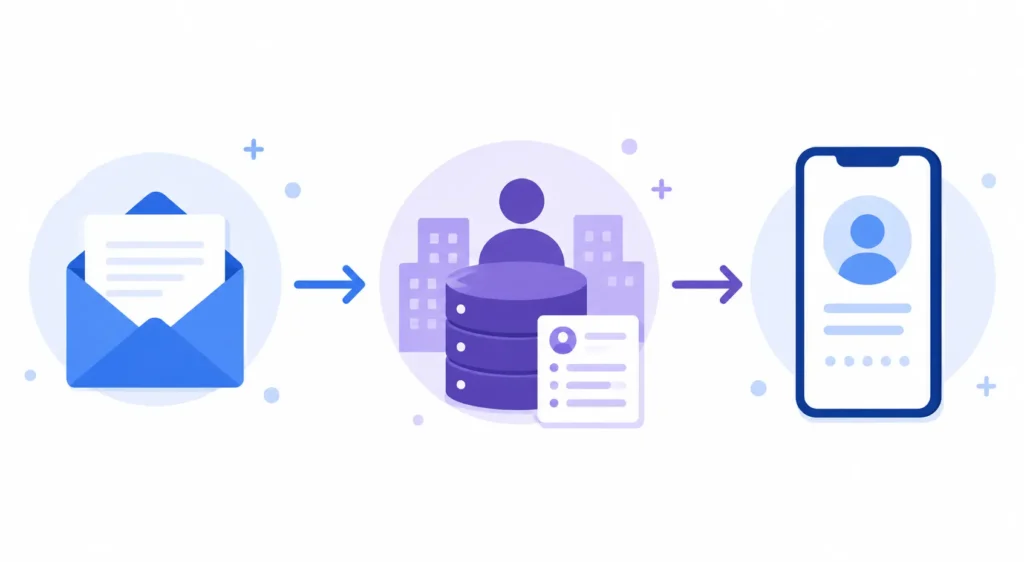
Scammers rarely guess numbers at random. Most of the time, your email address gets tied to your name and phone number through a data broker long before the call ever comes.
Here is the real chain of events.
- You sign up for something online using your real email address.
- That website is later breached, or it sells your data.
- A data broker buys the leaked information and matches your email to your name, phone number, and address.
- That full record gets sold again, sometimes many times, until it reaches a scammer.
- The scammer now has enough real details to sound believable on a call or in an email.
This happens more than most people realize. In October 2025, one single data incident exposed about 2 billion email addresses pulled from data brokers and infected devices. Separate research from the Identity Theft Resource Center found more than 3,100 data breaches reported in the United States in 2025 alone, affecting over 1.35 billion people.
Every breach notification you get is a small warning that your information moved somewhere new. Your email address is often the first piece of the puzzle a broker needs. Once it links to your name and phone number, the rest follows fast.
Why a Disposable Email Address Stops This Before It Starts
If your email never enters the pipeline, a broker has nothing to sell. A disposable email, also called temp mail, is a short-lived inbox that expires after you use it. It does not carry your real name or number, so there is nothing valuable for a broker to build a profile from.
You can use a free tool like freemail.ai for any sign-up you are not fully sure about, like a coupon code, a free trial, or a random forum. If that site gets breached later, the leak leads nowhere.
For data that is already out there, California passed a new law called the Delete Act. It created a tool called DROP, which lets California residents send one request to delete their information from every registered data broker in the state. It launched on January 1, 2026, and it is one of the first tools of its kind in the country.
If You Already Responded, What Should You Do Next?
If you already gave money or personal details, do not panic. Take these steps right away.
- If you paid by card, call your bank or card company and dispute the charge.
- If you paid by wire transfer or crypto, report it fast. These payments are hard to reverse, but reporting still matters.
- Place a free fraud alert with all three credit bureaus: Equifax, Experian, and TransUnion.
- File a report with the FTC and the CFPB, even if you feel embarrassed. This happens to careful people every day.
- Watch your bank and card statements closely for the next few months.
Acting fast gives you the best chance of limiting the damage.
The Bottom Line
United Client Solutions may be a real name, but that does not make every call or email real. Ask for written proof. Never pay on the spot. Block, report, and check your inbox the same way you would check your front door.
The most lasting habit is to guard your email address the same way you guard your phone number. A free disposable email from freemail.ai gives you a safe inbox for sign-ups you do not fully trust, so a future data leak has nowhere real to go.
Frequently Asked Questions
Is United Client Solutions a legitimate company?
A business by this name does seem to be real, but scammers copy the name often. Treat every call or email the same way. Ask for written proof before you pay anything.
Why is United Client Solutions calling me about a debt I do not recognize?
Debt gets sold from one collector to another, and records are not always accurate. Some calls also come from scammers with no real debt behind them at all. Either way, you have the right to ask for written proof first.
How do I get United Client Solutions to stop calling me?
Use the short script above, then hang up. Turn on your phone’s spam blocking, add a carrier filter, and try an app like Truecaller or Hiya for extra coverage.
What does a United Client Solutions email actually look like, and how do I check if it is real?
Check the real sender address, not just the name shown. Hover over links before you click them. Never send payment details by email. A real collector will not ask for that.
Can I sue United Client Solutions for harassment?
If they break FDCPA rules, like refusing written proof or calling after you asked them to stop, you may be able to sue. The law allows damages up to $1,000 per violation under 15 U.S.C. § 1692.
Where do I report United Client Solutions?
Report the debt problem to the FTC and the CFPB. Report the call itself to the FCC. You can also leave a public complaint with the BBB.
Is there a United Client Solutions phone number I can trust?
There is no single confirmed number to trust, since scammers use spoofed caller ID to fake almost any number. Do not call back a number left in a voicemail. Instead, check any real account through your own paperwork or your bank.