

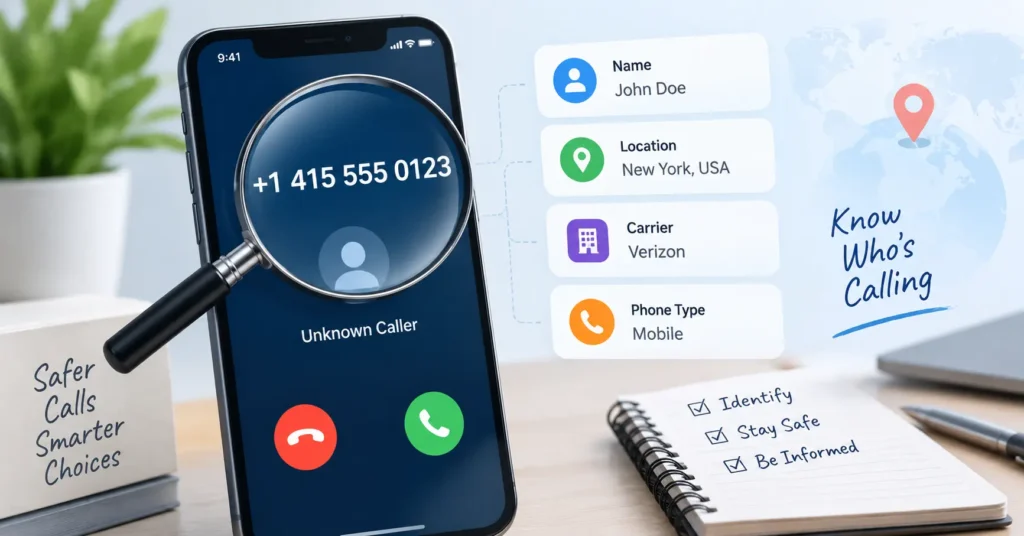
Most free phone number lookup tools give you a name and a rough location for no charge. The full report, with address history, relatives, and other background details, usually costs money. The fastest way to find out who called you for free is to stack methods: search the number on Google, check your carrier’s spam tool, then try a free lookup site. No free tool can unmask a spoofed number, so treat a blank result with caution, not comfort.
Introduction
Your phone rings. The number is not saved in your contacts, and something about it feels off. This is the moment a free phone number lookup is supposed to help with. The trouble is that many sites promise a free search, then ask for a credit card before they show you a name. This guide compares the real free options, walks you through the fastest way to find out who called you for free, and explains what these tools can and cannot do.
Best Free Phone Number Lookup Sites Compared
This list covers the best free phone lookup sites available right now, along with what each one actually includes for free. Some give you a real reverse phone lookup free of charge, with no strings attached. Others hold the name and location behind a paywall until you hand over payment details.
| Tool or Method | What the Free Version Gives You | Sign-Up Needed | Full Report Cost |
| Google search | Public posts, complaints, or listings tied to the number, from a basic public records search | No | Free |
| Spy Dialer | Name, carrier, and general location for many numbers | No | Free (voicemail greeting playback may cost extra) |
| Whitepages | Basic name and address match for listed numbers | No, for a basic search | Paid subscription for full report |
| NumLookup | Basic name and area match | No, for a basic search | Paid subscription for full report |
| IPQS | Carrier, line type, and a spam risk score | No | Paid plan for a full name match on some numbers |
| Truecaller (app) | Caller ID and spam warning if the number is in its database | Account needed | Free with limited daily lookups; paid tier removes limits |
A carrier lookup can also help on its own. It tells you whether a number is a cell phone, landline, or VoIP number, which is often a clue by itself, since VoIP numbers are the type scammers use most often. A free reverse phone lookup will not always agree across these options either. Each service pulls from its own mix of public records, carrier data, and people search reports from other users, so the same phone number owner can show up differently from one site to the next. If one tool comes up empty, try a second one before you decide the number is safe.
Is There a Free Phone Number Lookup With No Sign-Up?
Yes. A few tools return a basic result, usually a name and a rough location, with no account or card needed. Google and Spy Dialer come closest to a fully free reverse phone lookup with name and location included, and both work with no sign-up required and no fee attached. Sites like Whitepages, NumLookup, and IPQS often ask for an account or payment before they release the full match.
Here is a simple way to sort the options:
- Truly free, no sign-up: Google search, Spy Dialer
- Free preview, paid full report: Whitepages, NumLookup, IPQS, and most other background check sites
- Free with limits, account required: Truecaller and similar caller ID apps
If your goal is just to know who called, the truly free tier answers that question for most numbers. You only need the paid tier if you want a deeper background check, such as an address history or a list of relatives.
The Fastest Free Way to Find Out Who Called You
If you are searching how to find who called me, you do not need to try every tool on the list above. This order gets you an answer in the least amount of time, starting with the step that costs nothing and takes the least effort.
- Search the number on Google. Type the full number in quotes. If it is a known spam call or robocall number, complaint sites and forums will often show up right away.
- Check your carrier’s built-in spam tool. AT&T Call Protect, T-Mobile Scam Shield, and Verizon Call Filter all flag likely spam calls at no cost, and most of them are already turned on for your line.
- Run a free phone number lookup. Try Spy Dialer or a similar site for a name and general location.
- Try a caller ID app. Truecaller and similar apps compare the number against reports from millions of other users, which helps catch newer spam numbers that have not built up complaints yet.
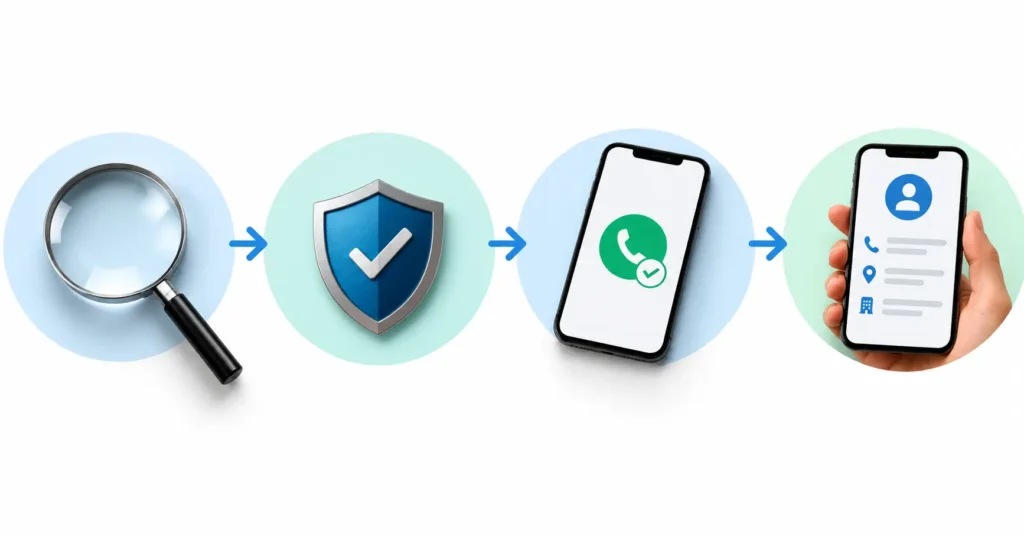
Pew Research Center has found that most people already let unknown numbers go straight to voicemail, which is exactly why a fast, free way to check the number matters so much. You can also add your number to the national Do Not Call Registry. It mostly stops legal telemarketers rather than scammers, but it is still a useful, free step worth taking once.
Most unknown numbers get solved in the first two steps, before you ever need a dedicated lookup site.
What a Free Phone Number Lookup Will Not Tell You
A phone number lookup can only tell you about the number that is actually calling you. That sounds obvious, but it matters more than most people realize, because of caller ID spoofing. Scammers can make a call appear to come from a local number, a bank, or even a government office, when the real call is coming from somewhere else entirely.
Carriers have been rolling out a system called STIR/SHAKEN, which checks whether a caller ID is genuine. Big carriers have made real progress here, and most of the calls passed between major carriers are now signed and verified under this system. Smaller and rural carriers have been slower to catch up, and that gap is part of why spoofed calls still get through. The FCC oversees these rules and keeps pushing carriers to close that gap.
Because of spoofing, a free lookup that shows no match does not mean a number is safe. It just means the tool could not find a record, or the caller ID was never real to begin with.
Why You Are Getting These Calls In The First Place
Spam calls and robocalls are not random. Most start with your phone number sitting in a database somewhere, often paired with your name and email address. These databases come from a few common sources: a company you signed up with got breached, a website sold your details to a data broker, or a form you filled out years ago quietly changed hands more than once.
Data breaches happen more than most people notice. The Identity Theft Resource Center tracked over 3,300 separate data breaches in a recent year, a new record. Every one of those events can put your phone number and email into circulation among data brokers. Once your number is in a broker’s file, it can get resold many times, which is one reason a spam call can come from a brand new number the next week even after you block the old one.
The money lost to these scams is real. The Federal Trade Commission (FTC) reported that people lost billions of dollars to calls, texts, and messages pretending to be a real bank, government office, or business in a single recent year, and the YouMail Robocall Index tracked over 4 billion robocalls placed to Americans in a single recent month alone. Agencies like the CFPB also track a steady stream of complaints tied to fake debt collectors calling with details that sound personal but were pulled from a purchased data file, not a real account. If you want to see exactly what that looks like in practice, our guide on how scam callers get your number and name in the first place walks through the full playbook, step by step.
How Do You Get Your Number Off These Lookup Sites?
You can ask to remove your phone number from lookup sites one at a time, through each site’s own opt-out page, or, if you live in California, submit one request through the state’s new DROP platform, which reaches every registered data broker at once. Neither method works instantly, but both lower your exposure over time.
California’s Delete Act created DROP, short for the Delete Request and Opt-Out Platform, through the state privacy agency called CalPrivacy. A California resident can file a single request that gets sent to hundreds of registered data brokers, instead of filling out a separate form for each one. It will not clear every site overnight, since brokers are given a window of time to process each request, but it replaces what used to be a long, repeated task with one simple form.
If you do not live in California, most individual sites still offer their own opt-out link, usually near the bottom of the page. It is worth doing this for the sites that show up when you search your own number.
Removal only solves the problem that already happened. The more lasting habit is keeping your real email out of the sign-up forms that feed these lists in the first place. A free, no sign-up disposable email address for sign-ups that do not need your real inbox from freemail.ai works well here, since it never carries your real name or number for a future data broker to find and sell.
Free vs Paid Phone Lookup: What Is Actually Different
A free phone number lookup usually gives you a name and a general area, which answers “who is this” for most calls. A paid report goes further, often adding a full address history, known relatives, social media links, and past records tied to that person.
Most of the time, this comes down to a free trial vs paid report setup rather than any real difference in honesty. The site is not lying about being free. It is just limiting what “free” includes. For a one-time unknown call, the free tier is almost always enough. The paid tier makes more sense if you are trying to verify someone you plan to meet, do business with, or trust with something important, where a name alone will not tell you enough.
The Bottom Line
A free phone number lookup can answer most “who just called me” questions without costing you anything, as long as you know which tools actually deliver on that promise. Start with Google and your carrier’s spam tool, save the paid background check sites for when you truly need more than a name, and take a few minutes to remove your phone number from lookup sites so the calls slow down over time. Protecting your email is part of that same habit. A disposable email address from freemail.ai keeps your real inbox out of the sign-up forms that end up feeding these very databases.
Frequently Asked Questions
Is there a completely free phone number lookup with no sign-up?
Yes. Google search and Spy Dialer are the closest to a fully free option. Most other sites give a free preview, such as a name and rough area, and charge for the complete report.
How do I find out who called me for free?
Start by searching the number on Google, then check your carrier’s built-in spam tool. If you still need more, try a free phone number lookup site or a caller ID app.
Is a free reverse phone lookup safe to use?
Trustworthy sites do not notify the person you searched and do not need sensitive personal details from you. Be careful of any site that asks for payment information just to unlock a “free” result.
Can a free lookup identify a spoofed number?
No. If a caller is using a spoofed number, a lookup can only tell you who the displayed number is actually registered to, not who really placed the call.
What is the difference between free and paid phone lookup results?
Free results usually give you a name and a general location. Paid reports add address history, relatives, and other background details.
Can I remove my own number from these lookup sites?
Yes. Most sites have their own opt-out page. California residents can also use the state’s DROP platform to request removal from every registered data broker with one submission.
Does a free phone number lookup work on landlines and VoIP numbers?
Landline numbers tend to match more reliably, since they are tied to public records that do not change often. VoIP numbers and new mobile numbers are harder to match and more likely to return no result.