

TruthFinder cost ranges from $4.99 to $29.73 per month, depending on the plan you pick. There is no option to buy a single report. You pay for a membership plan instead. A discounted trial is sometimes offered, but it turns into a full monthly charge if you forget to cancel within five days. TruthFinder holds an A+ rating with the Better Business Bureau (BBB), but it also settled a case with the Federal Trade Commission (FTC) in 2023. Both facts matter when you decide if the price is worth it.
TruthFinder cost is not one simple number. The final price depends on which plan you choose, how many months you commit to, and which extras you add on top. This guide breaks down truthfinder pricing plan by plan, shows what one search really costs once fees are added in, and covers what the BBB and FTC records say about the company behind the price tag. By the end, you will know exactly what you would pay and whether it fits your needs.
TruthFinder Pricing at a Glance (2026)
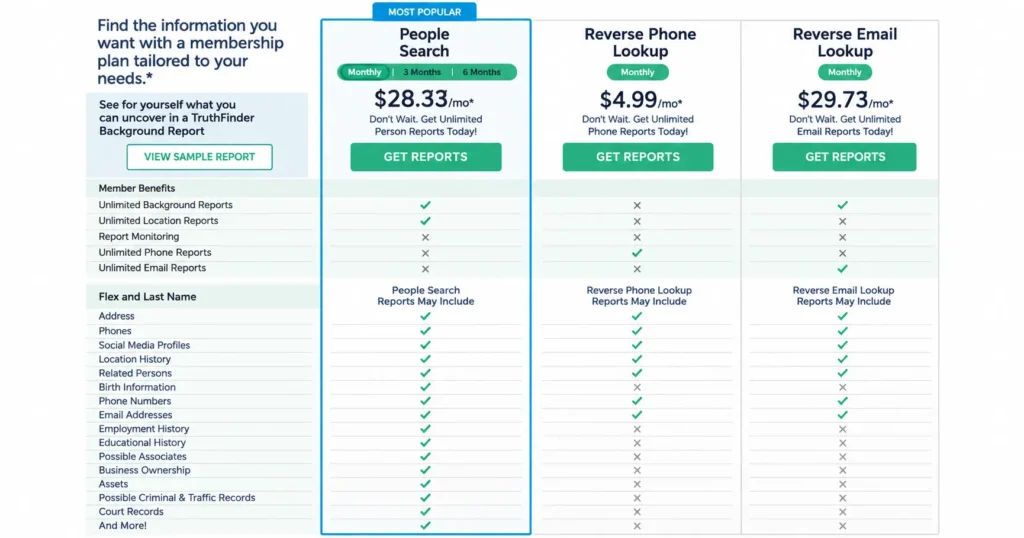
TruthFinder sells three main membership plans. Here is the truthfinder monthly cost for each one, plus the two optional add-ons.
| Plan | Price | Billing | What You Get |
| People Search | About $28.05/month (1-month term); about $23.52/month on a 2-month term | Monthly, auto-renews | Unlimited people search and background reports |
| Reverse Phone Lookup | About $4.99/month | Monthly, auto-renews | Unlimited phone number lookups |
| Reverse Email Lookup | About $29.73/month | Monthly, auto-renews | Unlimited email lookups |
| PDF Report Download | About $3.99 | One-time, per report | A saved copy of your report |
| Dark Web Monitoring | About $2.99/month | Monthly add-on | Alerts if your info shows up on the dark web |
Prices can change without warning, so check TruthFinder’s own pricing page before you sign up. Payment is usually made by Visa, Mastercard, or PayPal. These numbers still give you a solid starting point for what to expect.
How Much Does Each TruthFinder Membership Plan Cost?
TruthFinder has three core plans, and each one covers different needs. Here is what each plan actually costs and what it includes.
People Search Plan
This is the most complete plan, and the one most people pick. It costs about $28 per month on a one-month term. Commit to two months, and the price drops to roughly $23.50 per month. This plan includes unlimited reports covering relatives, social media profiles, address history, and public records tied to a name.
Reverse Phone Lookup Plan
At about $4.99 per month, this is the cheapest way to use TruthFinder. It only covers phone number lookups. You will not get criminal records or the deeper data included in the People Search plan.
Reverse Email Lookup Plan
This plan costs about $29.73 per month, which makes it the most expensive core option. It lets you search using an email address instead of a name or phone number. Some data, like criminal records, is left out of these reports too.
Add-Ons That Raise the Price
Two extras can push your truthfinder cost higher:
- PDF report download: about $3.99 per report
- Dark web monitoring: about $2.99 per month
Neither add-on is required, but many members add at least one.
Does TruthFinder Have a Free Trial, or Is That a Trap?

TruthFinder does not offer a true free trial. What it offers instead is a discounted trial, often priced around $1 for five days. You still have to enter a credit card to use it.
Here is the catch. If you do not cancel before the five days end, TruthFinder automatically starts full subscription billing at the regular monthly price. This is the biggest source of complaints about the service. Many people sign up for the $1 trial, forget about it, and then see a full monthly charge on their card days later.
If you plan to try the truthfinder free trial, set a reminder for four days out instead of five. That buffer gives you time to cancel before auto-renewal kicks in.
What TruthFinder Really Costs Once You Add Up the Fees
The advertised price and the real price are not always the same thing. TruthFinder does not let you buy a single report. You pay for a full month of unlimited reports, even if you only need one search.
Here is what that looks like in practice. Say you sign up for the one-month People Search plan at about $28. You run one search and download the PDF for $3.99. Your total cost for that one report is close to $32, not $28.
Run ten searches in that same month, and your cost per search drops to under $3 each, plus the PDF fee if you use it. The subscription model rewards members who search often and costs more per search for members who only need one report.
This is worth thinking about before you pay for any people search plan. A price that looks cheap on paper can cost more than expected if you only plan to use it once.
How Do You Cancel TruthFinder Before Getting Charged?
You can cancel a TruthFinder subscription at any time, and there is no cancellation fee. Follow these steps to avoid extra charges:
- Log in to your TruthFinder account.
- Go to your account settings.
- Select “Subscriptions” or “Cancel Membership.”
- Confirm the cancellation.
- If you would rather call, TruthFinder’s support line is open 7 a.m. to 4 p.m. Pacific time, Monday through Friday.
Support hours are limited, so plan around them. Try to cancel on a weekend or in the evening, and you may have to wait until the next business day, which could mean an extra charge hits your card first.
There is a federal law called the Restore Online Shoppers’ Confidence Act (ROSCA). It says companies that charge customers on a recurring basis must give them a simple way to stop future charges. Keep this in mind if you ever run into trouble with a truthfinder cancel subscription request online.
Why Do I See a “TRTHFDR*” Charge on My Credit Card?
If you spot “TRTHFDR*TRUTHFINDER.COM” on your bank or credit card statement, it almost always means you, or someone with access to your card, has an active or recent TruthFinder membership. This is simply the billing descriptor TruthFinder uses, and it can look unfamiliar even to people who signed up on purpose.
Before you assume it is fraud, check a few things first:
- Search your email inbox for a TruthFinder confirmation or renewal notice.
- Ask family members if they used your card for a search.
- Log in at TruthFinder.com to check your account status.
If none of that explains the truthfinder charge on credit card statements, contact TruthFinder support to ask about a refund. Then contact your bank if you still believe it is unauthorized. A federal law called the Fair Credit Billing Act gives you 60 days from the statement date to dispute a charge in writing.
Many of these mystery charges trace back to an old sign-up made with a real email address, one you gave out once and then forgot about. Keeping closer track of what you have signed up for, and which email address you used for it, makes charges like this much easier to catch early.
TruthFinder vs. BeenVerified: Comparing the Real Cost
BeenVerified is the service most often compared to TruthFinder, so here is how truthfinder vs beenverified cost stacks up.
| Feature | TruthFinder | BeenVerified |
| 1-month plan | About $28.05/month | About $26.89/month |
| Longer-term plan | About $23.52/month (2-month) | About $12.67 to $17/month (6-month) |
| Reverse phone lookup | About $4.99/month | Similar low-cost option available |
| Free trial | No true free trial; discounted $1 trial | Short, low-cost trial available |
| Single report purchase | Not offered | Not offered |
| Dark web monitoring | Yes, $2.99/month add-on | Not a standard add-on |
Both companies run on a subscription model, and both focus on consumer people search rather than employer-grade screening. BeenVerified tends to run a bit cheaper on longer terms. TruthFinder includes dark web monitoring as a separate paid option.
Is TruthFinder Worth It? What the BBB Rating and FTC Settlement Say
TruthFinder holds an A+ rating and BBB accreditation dating back to 2018. That sounds reassuring, but it only tells part of the story. Over the past three years, the BBB has logged more than 550 complaints about TruthFinder, most of them tied to billing and auto-renewal. Customer review scores on the BBB site sit well below average, closer to 1 out of 5 stars. Reviews on Trustpilot are more mixed, with a large share of positive ratings alongside the same billing complaints.
In 2023, the Federal Trade Commission (FTC) settled a case with TruthFinder LLC, along with related companies Instant Checkmate, The Control Group Media Company, and PubRec LLC. The FTC said the companies made false claims in their ads, including claims that their reports were more accurate than they really were. The companies agreed to pay $5.8 million and change some of their business practices.
None of this means TruthFinder is a scam. It is a real, BBB-accredited company based in San Diego, California, and it operates within the law. But the FTC settlement and the pattern of billing complaints are both worth knowing before you decide if truthfinder is worth it for your situation.
One more limit to know about: TruthFinder does not meet Fair Credit Reporting Act (FCRA) compliance standards. That means you cannot legally use TruthFinder reports to make decisions about hiring, housing, credit, or insurance. If you need a background check for one of those reasons, you need a proper consumer reporting agency instead, one built to follow FCRA rules.
Should You Pay for TruthFinder, or Is There a Cheaper Way?
Whether TruthFinder is worth the price depends on how you plan to use it. If you expect to run several searches a month, the unlimited reports included in a membership plan can make good sense. If you only need one search, the real cost per report climbs fast once you add in the plan price and any extra fees.
Before you pay for any background check or people search plan, ask yourself how many searches you truly need. A single search might be handled just as well by free public records tools, even if they take a bit more time and effort.
There is a bigger point worth thinking about too. Services like TruthFinder exist because personal information, old email addresses, phone numbers, and sign-up details, ends up scattered across public and semi-public databases over time. You cannot erase what is already out there. But you can be more careful about what you hand out going forward. Using a disposable or temporary email address for low-trust sign-ups is one small way to limit what data brokers can collect about you next. If you want to try that habit, FreeMail AI’s free temporary email generator is a simple place to start, and our cybersecurity tips guide covers more ways to protect your personal information online.
Frequently Asked Questions
Is TruthFinder free?
No. TruthFinder is not free. It sometimes offers a discounted $1, five-day trial, and a limited free preview search shows basic details like name, age, and possible relatives before you pay anything.
Can I buy a single TruthFinder report instead of a subscription?
No. TruthFinder only sells monthly membership plans with unlimited searches. There is no option to pay for just one report.
Is TruthFinder cheaper than hiring a private investigator?
Usually, yes, for basic public records searches. A private investigator costs much more per case, but TruthFinder cannot match an investigator’s depth or ability to check facts in person.
Does TruthFinder cost more for reverse phone lookup or people search?
Reverse Phone Lookup is the cheapest plan at about $4.99 per month, but it leaves out data like criminal records. The People Search plan costs more, about $28 per month, and gives you the fullest reports.
Will TruthFinder notify the person I searched?
No. TruthFinder searches stay private. The person you search for is not told about it.
Is TruthFinder FCRA-compliant for employment or tenant screening?
No. TruthFinder does not meet FCRA compliance standards, so it cannot legally be used for employment, tenant, credit, or insurance decisions. You would need a service built to follow Fair Credit Reporting Act rules for those purposes.